
Scattered knowledge
Critical context is spread across people, tools, files, repositories, and prior conversations.
Creating AI-driven intelligence for mission-critical operations.
primal. builds CROM, a controlled AI operations foundation that helps organizations turn complex work into approved workflows, useful intelligence, and traceable results.
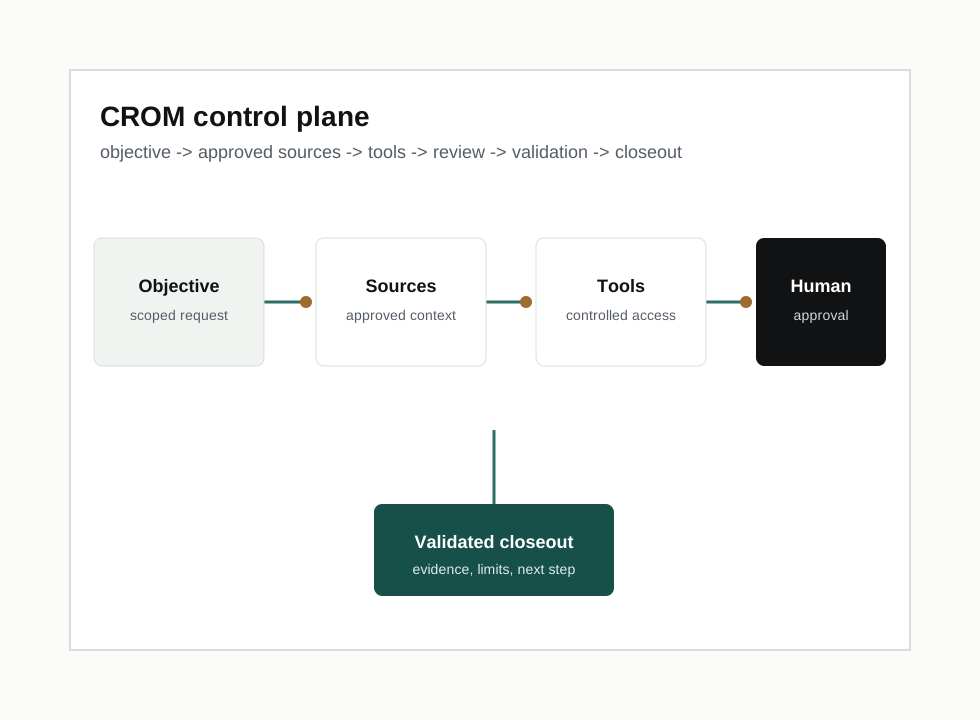
What CROM does
CROM helps a team define an objective, identify the systems involved, connect approved tools and knowledge, route work through a controlled process, require human review before material actions, and preserve the evidence needed for a useful closeout.
Problems primal. solves
Critical context is spread across people, tools, files, repositories, and prior conversations.
Teams see useful AI results, but need boundaries, validation, and approval before using them in real operations.
Technical work often lacks a clean bridge between objective, execution, evidence, limits, and next step.
Core capabilities
Map the workflow, systems, approvals, data boundaries, and risks before automation is proposed.
Start with one contained workflow and define success criteria before expanding.
Convert scattered sources into controlled documentation with traceable claims and gaps.
Use repeatable validation patterns for repositories, providers, and operational environments.
Plan deployment paths where data boundaries, approvals, and ownership matter.
Design domain-specific workflows around approved tools, source material, and review points.
How CROM works
Define the workflow and constraints.
Set the boundary and approvals.
Use only approved tools and sources.
Run one contained workflow.
Review output, evidence, and limits.
Turn validated work into a process.
Expand only where justified.
Human control
CROM is built for work where approval, traceability, and boundaries matter. It is not positioned as uncontrolled automation. It is a way to put AI, tools, and knowledge into a defined operating model.
Security and controlPRIMAL Tools
PRIMAL Tools support repeatable operational checks, controlled automation, repository hygiene, provider validation, and cross-system workflows without exposing privileged procedures publicly.
Explore PRIMAL ToolsFounder
Noah Thomas Leask is a technology entrepreneur, U.S. Navy veteran, and founder/executive associated with ISHPI and primal. Public-safe records support his work in cybersecurity, information systems, federal contracting, entrepreneurship, data/API systems, and AI-adjacent technology.
About NoahStart small enough to validate
primal. will help determine whether it is ready for a controlled CROM pilot, what must remain human-approved, and what should not be automated yet.